
Electrostatics – Resolution – EN
ELECTROSTATICS – RESOLUTION
Commented Resolution
Electrostatics
Electric Field – Electric Potential
01-(ENEM-MEC)
Depolarization occurs in the phase where the potential reaches the threshold (dashed line) and rises, which is phase 0 — repolarization occurs when the potential is returning to the resting potential, which occurs in phase 3.
R-B
02- (ENEM-MEC)
Power of the tips – if the electric field that is close to the tips of a certain conductor is very intense with a greater amount of electric charges, it can ionize the atoms of the
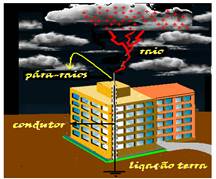
elements that form the air, which is no longer an insulator, becoming an electrical conductor, and the conductor discharges through the tips. This phenomenon is called tip power and it is based on the operation of lightning rods — therefore, at the tips of an electrified conductor, we find a greater quantity of charges per unit area — R- A.
03-(ENEM-MEC)
Electrostatic shielding – If the electric field inside a hollow conductor in electrostatic equilibrium  is zero, any electrical or electronic device placed inside it will be protected from external disturbing influences. This phenomenon was experimentally proven by Michael Faraday when he enclosed himself inside a conductive cage, where he found that there were no electrical phenomena inside it. This cage must be made of electrically conductive material and does not need to be continuous, but can be a metal mesh, which is why it is called a cage.
It was adapted to protect highly sensitive instruments and devices placed inside it. Note in the figure below that the sphere of the electrostatic pendulum, when inside the cage, is not subject to electrical influences from the electrified external sphere.
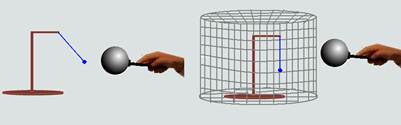
Electrostatic shielding (Faraday cage) is also used in cars and airplanes, offering

protection against electrical discharges. Buildings are also made using electrostatic shielding in order to protect your electrical and electronic equipment
R-B
04-(UERJ-RJ)
The intensity of the force f between two equal electric charges q separated by a distance r is given by f=kqq/r 2 — between charges 2q and 3q separated by the same distance r it will be — f’=k.2q.3q/r 2 =6k.qq/r 2 =6f — f’=6f — R- E.
05-(FGV-SP)
Electrical force — Fe=KQq/d 2 — gravitational force — FG=GMm/d 2 — making them equal — KQq/d 2 = GMm/d 2 — KQ 2 /d 2 = GM 2 /d 2 — M 2 Q 2 =KG — MQ=√(KG) — R- C
06- (UFPE-PE)
When r=3m — F=2.5.10-4N — F=KQq/r 2 — 2.5.10 -4 =9.109.QQ/32 — Q2=2.5.10 -13 =25.10 -14 — Q=5.10 -7 C — R-E
07-(UFG-GO)
Look at the figures below:
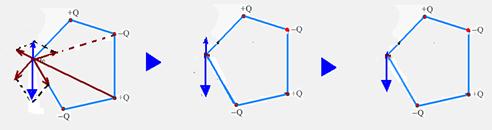
R-D
08-(FGV-SP)
At each end of the four diagonals passing through the center of the cube there are two
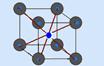
charges of the same magnitude and sign. They exert forces of the same intensity and opposite directions on the central charge (also of the same sign and magnitude as those at the vertices). Therefore, these forces balance each other, and the resultant of these forces is zero.
A- A
09-(FUVEST-SP)
I. Correct — a force only appears on the charge if there is an electric field that creates that force.
II. Right — if there is no charge, the electric field can exist without the electric force.
III. Wrong — no force will arise on the charge if there is no electric field
R-D
10-(UCSal-BA)
The point P where the resulting electric field should be zero must be to the right of Q (note
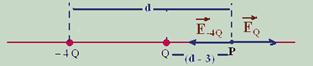
figure) — the charge – 4Q creates an approaching field and the charge + Q, a moving away field — E 1 = K4Q/d 2 — E 2 = KQ/(d – 3) 2 — E 1 = E 2 — 4KQ/d 2 = KQ/(d – 3) 2 — (d – 3) 2 /d 2 = 1/4 — (d – 3)/d=1/2 — d=6 units — is zero at point 10.
A- A
11-(FUVEST-SP)
The only alternative in which the positively charged object is not deflected (zero resulting force) during the fall is E (see figure below):
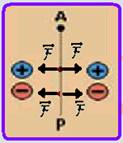
And (see figure above).
R- And
12-(FUVEST-SP)
Neutrons are not deflected and the electric field deflects the protons downwards (they are repelled by the positive plate) R- E
13-(UFMS-MS)
R- C — the dipoles are floating — the weight and electric forces cancel each other out — note that the dipoles will be aligned predominantly in the vertical direction with the negative charges facing downwards (repulsion) and the positive charges facing upwards (attraction)
14-(FATEC-SP)
Comment: Metallic materials have greater electrical conductivity, so they are more easily polarized and attracted by external electric fields.
R-B
15-(UFV-MG)
They leave A and C (positive) and arrive at B (negative) — R- E
16-(PUC-RS)
The points must be equidistant from Q — see figure below:
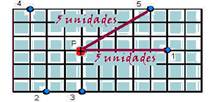
R-B
17-(UNIFESP-SP)
All points on each equipotential surface have the same electrical potential — the work done to move the charge from one point to another is independent of the trajectory, depending only on the potential at the initial and final points — W=q(VA – VB) — note that the largest ddp (VA – VB) is that of the trajectory V — R- E
18-(ITA-SP)
Kq 1 /d 1 + Kq 2 /(6 – d 1 )=0 — K.1/d 1 – K.2/(6 – d 1 )=0 — d 1 =2m — potential is zero at 2m from d 1 , that is,
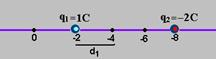
at points x=-4m and
x=4m and, at all points that constitute a sphere of radius 4m (equipotential surface) —
A- A
19-(UFV-MG)
Electrostatic shielding – If, inside a hollow conductor in electrostatic equilibrium, the electric field is zero, any electrical and electronic device, when placed inside it, will be protected from external disturbing influences.
This phenomenon was experimentally proven by Michael Faraday when he enclosed himself inside a conductive cage, where he found that there was no manifestation of electrical phenomena inside it. This cage must be made of electrically conductive material and does not need to be continuous, but can be a metal mesh, which is why it was given the name cage.
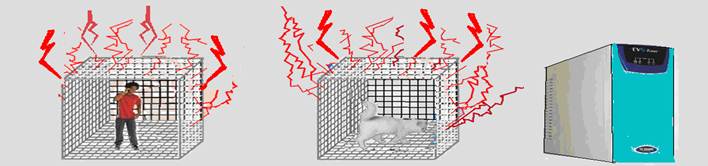 It was adapted to protect highly sensitive instruments and devices placed inside it. Note in the figure below that the sphere of the electrostatic pendulum, when inside the cage, is not subject to electrical influences from the electrified external sphere.
Electrostatic shielding (Faraday cage) is also used in cars and airplanes, offering protection against discharges.
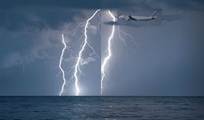

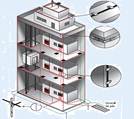
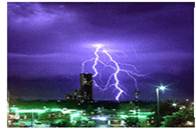
electrical. Buildings are also made using electrostatic shielding in order to protect your electrical and electronic equipment.
R-D
20-(UFRGS)
Any excess charge will tend to repel and will be concentrated on the surface of the outer sphere — R- E
21-(UEG-GO)
See theory at fisicaevestibular.com.br – electrostatic electricity – Conductor in electrostatic equilibrium – Electrostatic shielding – R- D
22-(UFMS-MS)
I. Correct — with S 1 turned on, negative electric charges from the generator will flow to the solid conducting sphere, electrifying it, which in turn will induce positive charges on the outer surface of the conducting spherical shell, which will also induce charges on the pendulum, which remains neutral, attracting it by electrical induction.
II. Correct — see in fisicaevestibular the process of electrification by induction.
III. False — the electrified spherical shell creates an electric field around it.
IV. Correct — see 02
V. False — see 01
A- A