
Ohm’s Second Law (Resistivity) – 2024 EN
OHM’S SECOND LAW (RESISTIVITY)
Ohm’s Second Law (Resistivity)
Through research, Ohm discovered that the electrical resistance of a conductor , kept at a constant temperature, depends on three factors:
 The electrical resistance R is directly proportional to the length L of the wire.
Consider a conductive metal wire of the same material ( for example , copper Cu) and the same cross-sectional area S , subjected to a constant potential difference U.
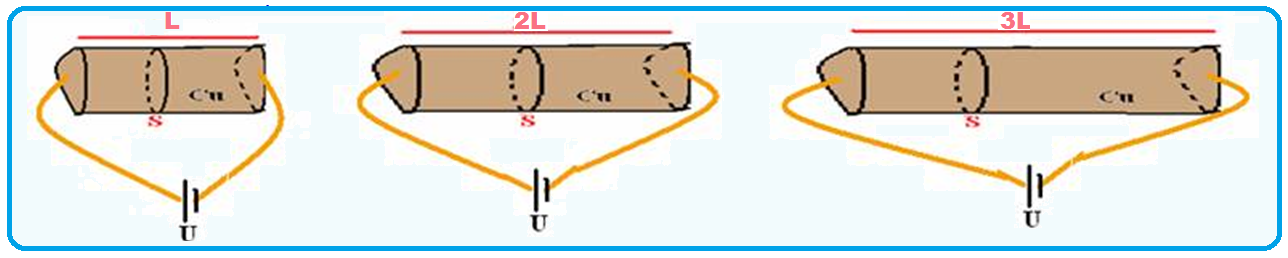
Experimentally it is found that R is directly proportional to L, that is, a double length corresponds to a double resistance, a triple length, triple resistance, etc.
 The electrical resistance R is inversely proportional to the cross-sectional area (S).
In the diagram below, the wires are of the same material and the same length L, but with straight sections (thicknesses) of different areas S.
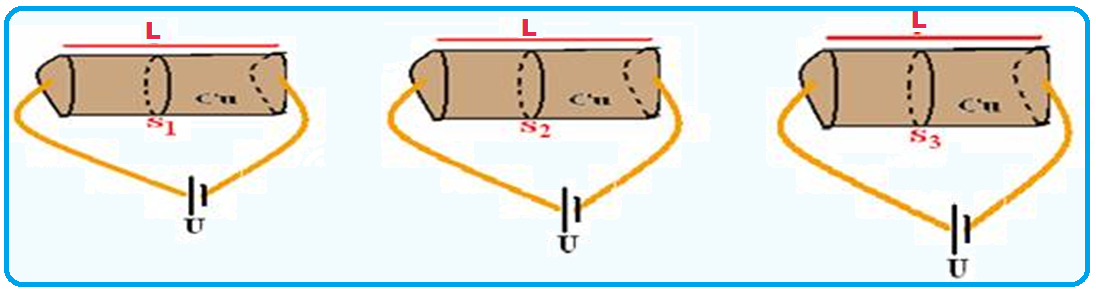
In this case, the resistance R is inversely proportional to S, that is, at a double cross-sectional area, the resistance drops by half; at a triple area, resistance three times less, etc.
The electrical resistance R depends on the material that makes up the body.
Wires of the same length L and the same cross-sectional area S, but made of different materials, have different electrical resistances.
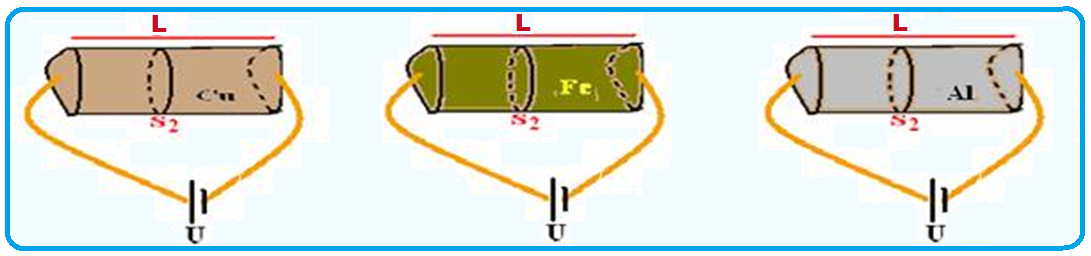
This dependence of the resistance value on the material that makes up the resistor is called the resistivity of the material and is represented by the Greek letter ρ “rô”.
The three factors above can be mathematically represented by the equation:

Derivation of the unit of resistivity (ρ) in the international system of units (SI)

What you should know, information and tips

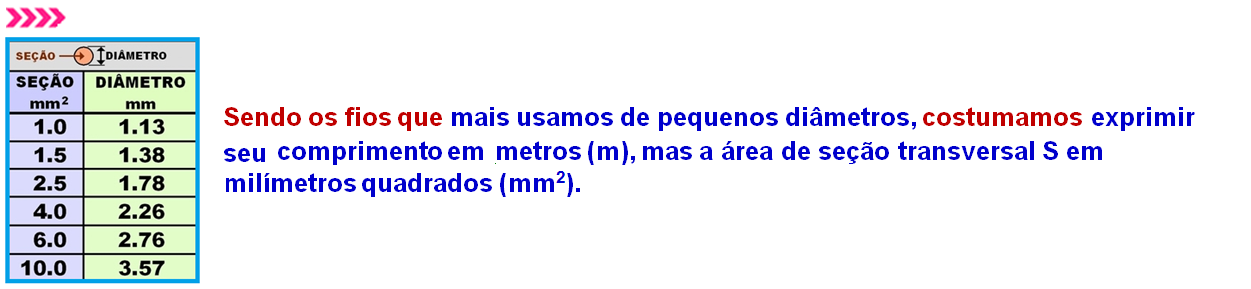
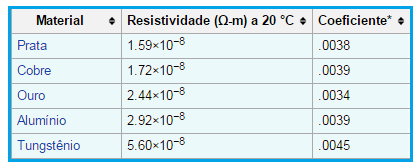
When you state that the SI resistivity of aluminum is ρ Al = 2.8.108 Ωm , you mean that an aluminum conductor, 1 m long and 1 m2 in cross-sectional area , has a resistance of R = 2.8.108 Ω , maintained at a constant temperature, in our example at 20 o C.

Table with resistivity values of some materials
Rheostats
Rheostats are variable resistors whose purpose is to adapt the intensity of the electric current to desired values.
Types of rheostats:
The main types of rheostats are cursor rheostat varying the cursor you are 
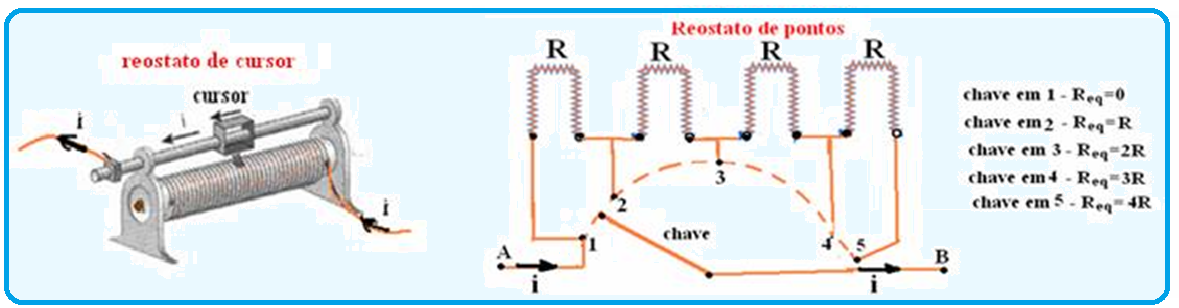 varying the resistance (figure 1) point rheostat in each position of the switch the electrical resistance has a certain value (figure 2).